Editorial Standards
Holding the Craft of Observation to Account
Tarnola Journal is an independent editorial publication exploring everyday eating habits, food pace, and meal behaviour in modern life. The publication is not affiliated with any commercial, governmental, or institutional body.
01
Editorial Principles
Tarnola Journal operates under the following editorial principles: articles are reviewed by at least one second editor before publication, sources are cited where appropriate, corrections are noted publicly, and writers disclose any commercial relationships that could influence their selection of subject matter.
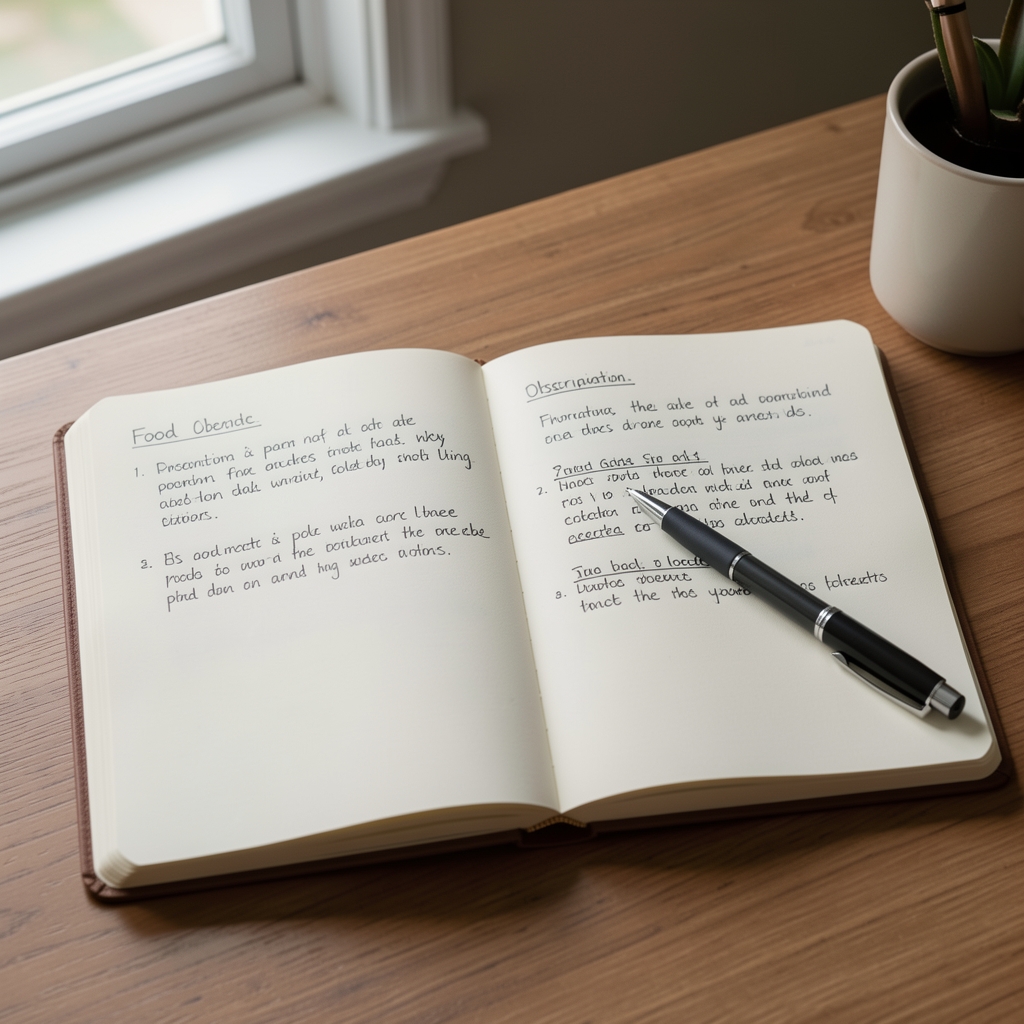
Each piece published on this journal begins with direct observation. Whether that means recording the duration of a working lunch, noting the contents of a convenience food purchase, or observing the role of screens during mealtimes, the primary method is attentive, unhurried watching. Editorial shaping follows only once the observation is complete.
We do not publish prescriptive content. No article on Tarnola Journal tells a reader what to eat, when to eat, or how to organise a meal. The publication's interest lies in how eating actually happens — not how it theoretically should.
02
How an Article Comes Together
Subject Identification
Each article begins with a question that arises from observation rather than argument. A writer notices a pattern — perhaps that weekend meals consistently take twice as long as weekday ones, or that takeaway habits cluster around particular times of the working day — and proposes the observation as an editorial subject.
Source Verification
Where published nutritional research or food-behaviour studies are referenced, the editor verifies the source before publication. Content published by Tarnola Journal is selected based on published nutritional research and reviewed for editorial accuracy by a second editor before publication. No claim is made without a traceable reference.
Second Editorial Review
Every article submitted to the journal is read by a second editor before publication. The reviewer reads for factual consistency, appropriate framing, and any inadvertent claims of certainty where the evidence is observational rather than definitive. Editorial notes are returned to the writer before final publication.
Corrections Protocol
Errors, once identified, are corrected promptly. A correction note is appended to the relevant article with the date of the change and a brief description of what was amended. We do not remove articles; we amend them transparently. Readers who spot inaccuracies are encouraged to write to us directly at [email protected].
Commercial Disclosure
Writers are required to disclose any existing or prior commercial relationship with organisations mentioned in their articles. Tarnola Journal does not accept advertorial submissions or paid editorial placements. Where a writer has a professional connection to a food producer, outlet, or related organisation, this is stated clearly at the foot of the relevant piece.
Ongoing Observation
The journal regards eating pace and food behaviour as an ongoing, evolving subject. Articles are not considered closed once published. Where new evidence or observation contradicts an earlier piece, a follow-up is considered. The archive is a living record, not a fixed document.
03
What the Journal Covers
Speed and Rhythm
How quickly meals are consumed in contemporary life, what pace variation looks like across the week, and how the speed of eating relates to awareness of portions consumed.
Food Under Pressure
Everyday food decisions made under time constraint — what is reached for, what is bypassed, and how routine convenience food habits accumulate across a working week.
Screens and Meals
The relationship between screen use during mealtimes, attention to food, and the gradual loss of meal environment awareness in households and workplaces.
04
A Note on Editorial Scope
Articles published on Tarnola Journal are editorial in nature and reflect the writers' observations on eating pace, convenience food habits, and everyday meal behaviour. The content is not intended as professional advice, nor as guidance for the management of any specific condition. Readers with specific concerns about their eating habits are encouraged to speak with a qualified wellness professional.
This is not a publication for weight management programmes, dietary regimes, or food-as-wellness prescriptions. Our interest is observational and editorial. We document and reflect; we do not recommend.
We recommend speaking with a qualified wellness or nutrition professional before introducing any new habit or routine to your daily life, particularly if you have specific dietary requirements.
05
Source Standards
When Tarnola Journal articles draw on external research, the following hierarchy of sources is preferred:
Peer-reviewed nutritional science and food-behaviour research published in indexed academic journals. Authors are named; publication details are cited.
Institutional reports from recognised bodies in public nutrition, food behaviour, or dietary observation — including public health organisations and national dietary surveys.
Direct editorial observation and first-person field notes by the writing team. These are clearly framed as observational rather than research-derived, and carry no claims of broader statistical representativeness.
06
Frequently Asked Questions
No. Tarnola Journal is an independent editorial publication. It is not affiliated with any food manufacturer, retail organisation, wellness brand, or institutional body. All content decisions are made editorially, without commercial influence.
Occasionally. Guest contributors are considered when the proposed subject falls clearly within the journal's editorial scope and the writer can demonstrate a relevant background in food journalism, nutritional observation, or related fields. All submissions undergo the same editorial review process as in-house pieces.
Corrections are appended to the relevant article with the date of the change and a clear description of what was amended. We do not delete or revise articles without disclosure. If you believe an article contains an inaccuracy, please write to [email protected] with the specific detail in question.
Yes. Every article is reviewed by a second editor before it goes live. The review covers factual consistency, source verification, and editorial framing. The reviewer is independent of the writer and may return notes requesting changes before publication is confirmed.
Tarnola Journal does not offer eating advice. It documents and reflects on eating patterns, food pace, and meal behaviour as observed in contemporary daily life. Nothing published here is intended to direct how a reader eats, what they choose, or when. Readers with specific nutritional concerns are encouraged to speak with a qualified wellness professional.