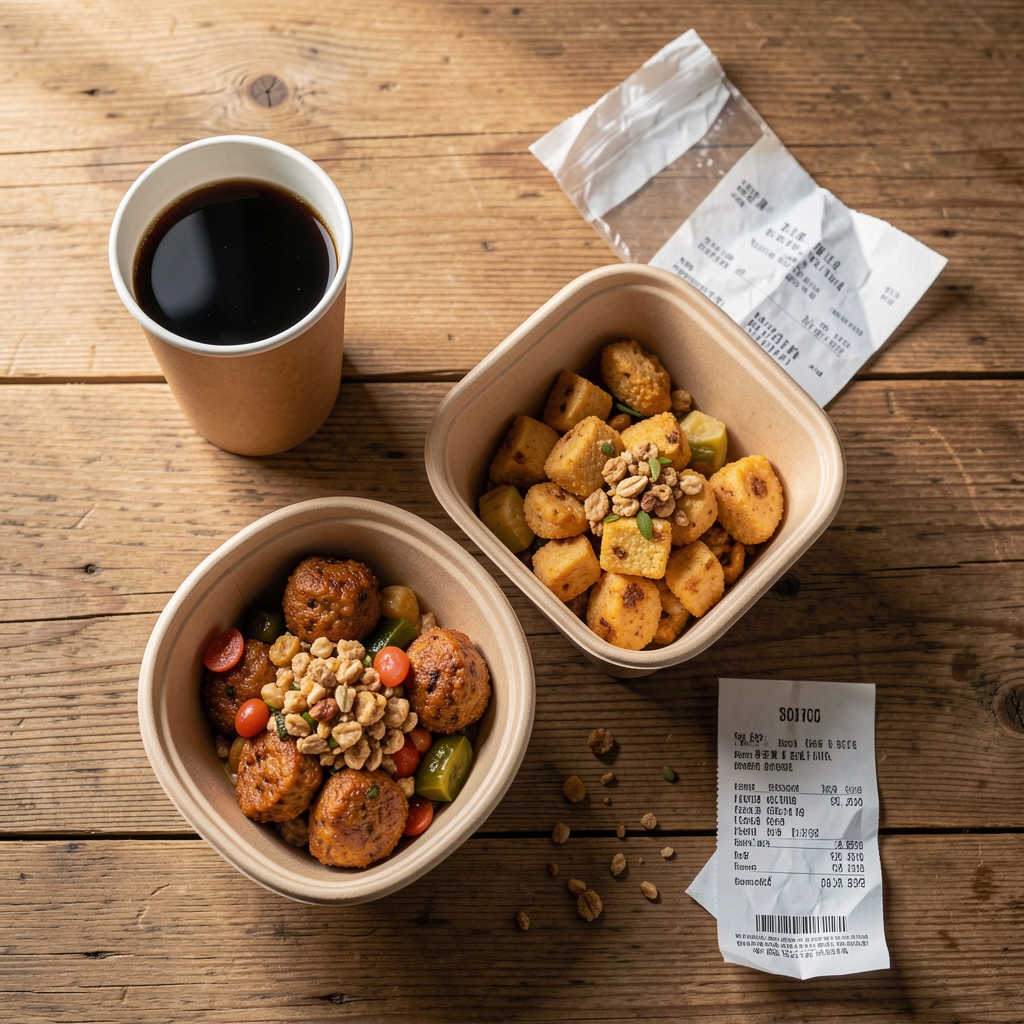
Eating Pace
The Pace at Which We Eat — A Food Journalist's Notebook
Eleanor Whitfield
·
·
9 min read

Consider what it means to eat a meal with a screen present. Not in the sense of a specific technological object, but in the sense of a competing object of attention — something that draws focus continuously and rewards engagement with new information. The screen does not pause when the fork is raised. The meal does not wait.
Across a two-week period in February, I recorded every meal that occurred in the presence of a screen — any screen, including a phone, laptop, television, or handheld device. I also recorded every meal that took place without a screen. The log did not ask me to change anything. It asked only that I note what was present and what followed.
The results were straightforward in their imbalance. Of the thirty-six recorded eating occasions across the two weeks, twenty-nine involved a screen. Seven did not. The seven screen-free meals included two weekend breakfasts, three evening meals eaten in conversation, one lunch at a park bench without a phone, and one dinner during a power cut. The conditions for screen-free eating, in other words, were largely extraordinary. The screen-accompanied meal was simply the meal.
Published research on this pattern — the prevalence of screen-accompanied eating in modern daily life — consistently finds rates above sixty percent for adults in working-age populations in the United Kingdom. Some studies place the rate closer to seventy percent for weekday meals. The log confirmed this at the personal level. The screen was present more often than it was absent, and its absence required a particular circumstance to achieve.
The experience of eating while attending to a screen differs from the experience of eating with background noise or in a busy environment. Background noise — the sound of a coffee shop, a street outside — exists in a different perceptual register. It can be present without actively consuming attention. A screen is different. It asks for the eyes. It asks for reading, or tracking, or responding. It is, in its design, attention-seeking.
When attention is divided between eating and a screen, the eating occupies what might be described as the secondary position. The fork moves; the food enters the mouth; the mechanics of chewing proceed. But the attentive experience of the meal — the registration of taste, the awareness of portion, the monitoring of appetite — is diminished. The meal is happening in the periphery of the experience rather than at its centre.
This matters because appetite awareness is, in part, an attentive act. The signals that communicate fullness — the shift in the character of hunger, the changing desirability of additional food — are not loud. They are quiet, and they require some degree of attention to be registered as meaningful. When the attentive capacity is occupied by a screen, these signals can pass without notice.
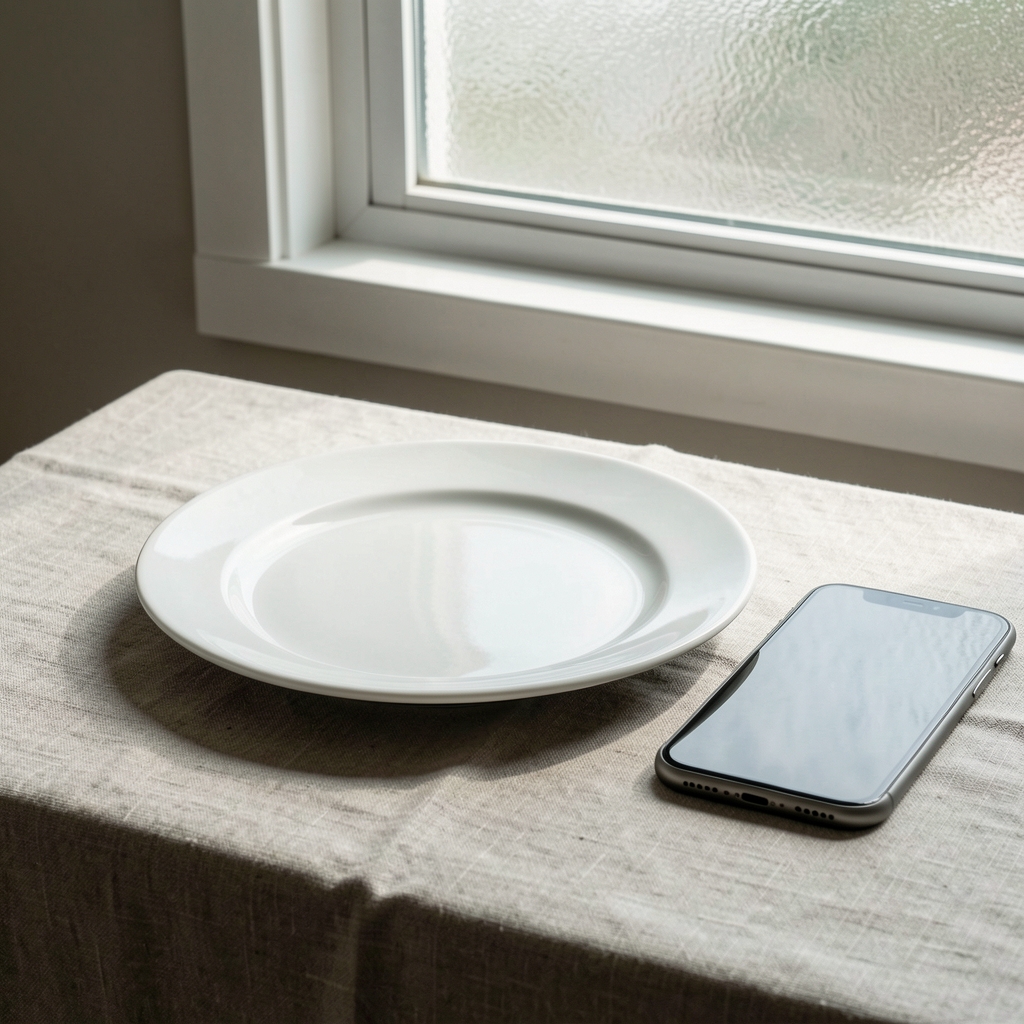
Fig. 1 — After the meal: phone face-down, February 2026
Of the seven screen-free eating occasions in my log, the most informative was a Tuesday evening meal eaten with a friend at a kitchen table. The meal was pasta, prepared at home, consumed over roughly forty-five minutes in conversation. No phone was present on the table. The television was off. The conversation moved between subjects without any mediation from a device.
I noted that I became aware of fullness approximately halfway through the portion I had served myself, and made a conscious decision not to finish it — something I had not done, on review of the log, in any of the previous eleven dinner occasions. In each of those, the food had been finished without particular awareness of the decision to continue eating. The plate had simply emptied.
This is not a dramatic finding. It is a small, particular observation. But it is the kind of observation that becomes meaningful when considered against the backdrop of a daily eating rhythm in which the screen is present at almost every meal. If the screen-free occasion is the exception, and the screen occasion is the norm, then the capacity to register the quiet signals of appetite is exercised rarely. What is rarely practised tends to diminish.
"If the screen-free occasion is the exception, and the screen occasion is the norm, then the capacity to register the quiet signals of appetite is exercised rarely."
Eleanor Whitfield — Tarnola Journal, February 2026
Published observation on eating rhythm and the pace of modern mealtimes suggests that screen-accompanied eating is associated, on average, with both faster eating speeds and larger portion consumption during the same meal occasion. The two effects are related: speed reduces the time available for satiety signals to register, and reduced attentiveness to the food means that the eating continues past the point at which it might otherwise have paused.
The phrase "eating without attention" captures something that numbers alone do not. It describes a quality of presence during the mealtime — or rather, the absence of that presence. When food is consumed in the peripheral register of experience, the meal exists as a series of motor actions rather than as an attended, meaningful occasion. The distinction between these two modes of eating is not merely philosophical. The attentive meal and the inattentive meal produce different outcomes in appetite experience, even when the food and the portion are the same.
This is not an argument for the abolition of screens, or for any particular arrangement of the mealtime. It is an observation about what is present and what is absent when a screen accompanies every eating occasion. The absence is attention. The presence of attention — even in a partial or imperfect form — appears, from the evidence available in both published research and personal observation, to contribute something to the experience of eating that the absence of attention does not.
The eating habits documented in this series — the hurried meal, the convenience choice made under time pressure, the mealtime shared with a screen — are not unusual. They are, by most accounts, the ordinary eating habits of a significant portion of the adult population in contemporary urban life. That is precisely why they are worth examining.
The ordinary is often where the most revealing patterns are found. Not the crisis, not the exceptional occasion, but the Tuesday evening dinner, the weekday lunch, the breakfast grabbed before the commute. These are the eating occasions that make up the majority of a life's mealtimes, and their accumulated shape matters more than any single occasion, however carefully attended.
The next piece in this editorial series will turn to the question of meal environment more broadly — the surface on which food is placed, the light in the room, the presence or absence of other people. The screen is one element of the meal environment. It is not the only one that shapes the eating rhythm. But it may be the most pervasive one currently operating in the everyday meals of the people this journal is written to observe.
Observations — Two-Week Log

Written by
Eleanor Whitfield
Eleanor Whitfield is the founding editor of Tarnola Journal. She writes on food pace, everyday eating habits, and the relationship between meal environment and portion awareness. Her work draws on published nutritional observation research and first-person field notes.
More from this author →